
Adaptive Block Mixed-Precision Cholesky Factorization for Large-Scale Space-Time Gaussian Processes
University of Connecticut, USA
A workshop at the International Conference for High Performance Computing: Networking, Storage, and Analysis
November 15-20, 2026
Chicago, IL
With the availability of large-scale weather, climate, and Earth data from multiple sources, including satellites and sensors, existing modeling techniques need further improvement to handle these data volumes. The high-performance computing (HPC) community can help. In the last decade, HPC has played an essential role in scaling existing weather modeling methods, enabling improved forecasting and proactive responses to severe weather conditions. However, this area warrants greater attention from HPC researchers to better understand the impact of climate change on future generations and to mitigate sudden disasters, including earthquakes and extreme weather events. Thus, we propose a dedicated workshop about coupling HPC with environmental and earth science. We chose SC as the venue for this workshop to reach a broad segment of the HPC community. The workshop will cover challenges around large-scale environmental modeling and possible solutions from the HPC community.
The HPC4EES workshop invites submissions covering a broad range of topics at the intersection of high-performance computing, AI, and environmental and Earth sciences, with particular emphasis on scalable modeling, robust simulation and forecasting, and reliable, efficient, and reproducible computational methods.
Notification: June 1st, 2026
Deadline: July 31, 2026, 11:59 PM AoE August 7, 2026, 11:59 PM AoE (Closed)
Notification: September 4th, 2026, 11:59 PM AoE
Deadline: September 25th, 2026, 11:59 PM AoE
Join us for the HPC4EES workshop at SC 2026

University of Connecticut, USA
King Abdullah University of Science and Technology (KAUST), Saudi Arabia
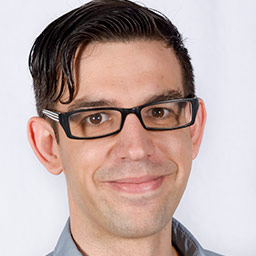
Barcelona Supercomputing Center (BSC), Spain
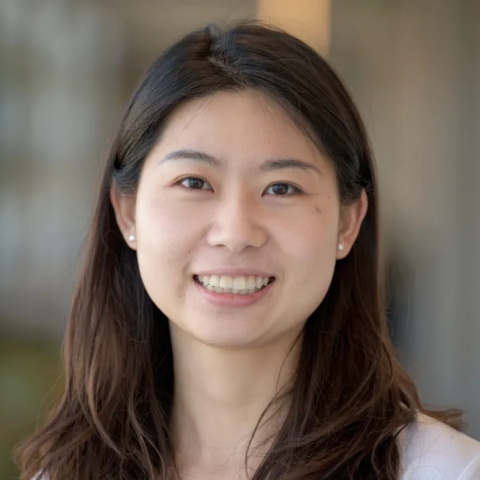
The University of British Columbia (UBC), Canada
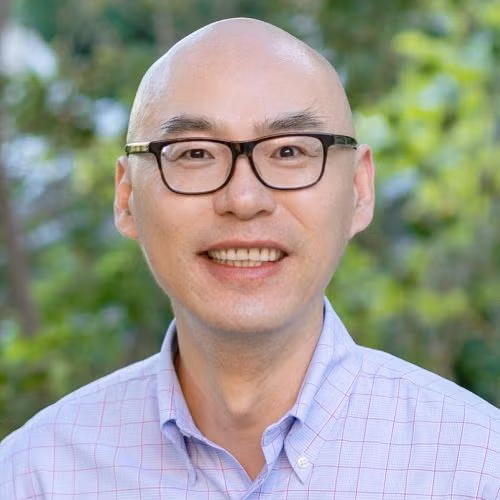
The University of California, Los Angeles (UCLA), USA
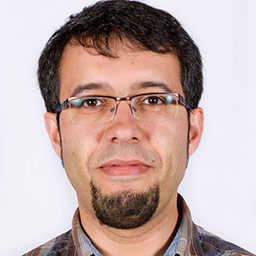
Barcelona Supercomputing Center, Spain
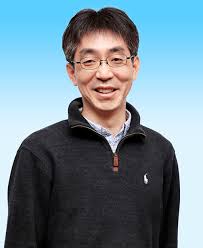
RIKEN Center for Computational Science, Japan
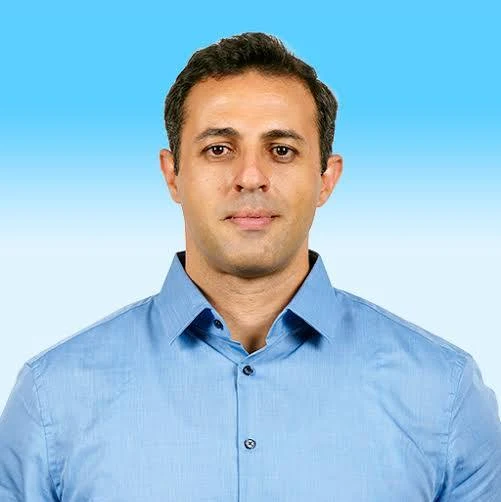
RIKEN Center for Computational Science, Japan
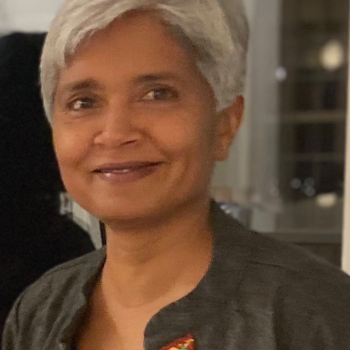
RIKEN Center for Computational Science, Japan
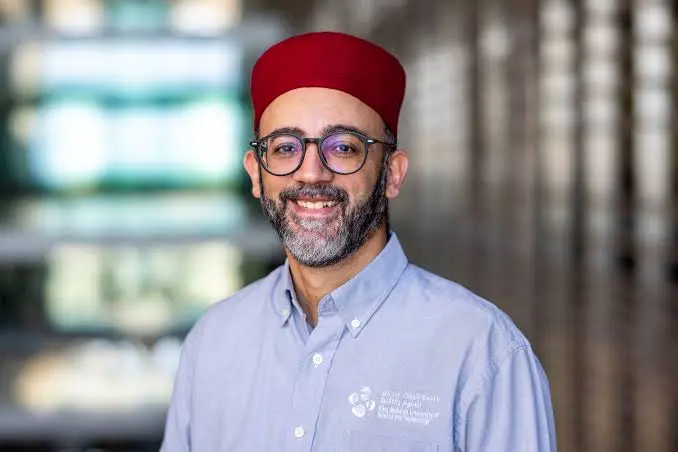
King Abdullah University of Science and Technology (KAUST), Saudi Arabia
The University of Tennesse, Knoxville, USA
Skyverse Technology Co., China

Full Professor of Computer Science, ETH Zurich
Director, Scalable Parallel Computing Laboratory (SPCL)
Chief Architect for AI and Machine Learning, Swiss National Supercomputing Centre (CSCS)
On Big Data, Big Simulations, and Big plans for AI in Climate Sciences
Climate science is being transformed by the convergence of AI, simulations, and high-performance computing. This talk explores how data compression and representation learning can extract knowledge from massive climate datasets, how Gordon Bell Award-winning simulations are pushing the frontiers of weather and climate modeling, and how DaCe enables automatic optimization and differentiation of legacy Fortran codes for modern heterogeneous systems. Building on these advances, I will outline a roadmap toward an AI climate scientist: a system that unifies observations, simulations, scientific reasoning, and machine learning to accelerate discovery, formulate hypotheses, and ultimately become a collaborative scientific partner in understanding and predicting Earth's changing climate.
Torsten Hoefler is a Full Professor of Computer Science at ETH Zurich, where he directs the Scalable Parallel Computing Laboratory (SPCL). He is also the Chief Architect for AI and Machine Learning at the Swiss National Supercomputing Centre (CSCS) and a long-term consultant to Microsoft in the areas of large-scale AI and networking. His research focuses on understanding and improving the performance of parallel computing systems, spanning computer architecture, parallel programming, algorithms, high-performance networking, weather and climate simulations, and distributed deep learning.
He is an ACM Fellow, an IEEE Fellow, and a member of Academia Europaea. His honors include the ACM Prize in Computing, the ACM Gordon Bell Prize, the IEEE Sidney Fernbach Award, and the inaugural ISC Jack Dongarra Early Career Award. He has published more than 300 peer-reviewed papers and has contributed to the MPI standard.
The following papers have been accepted for presentation at HPC4EES 2026.
University of Connecticut, USA
University of Trento, Italy
Texas Advanced Computing Center / University of Texas at Austin, USA
Beijing Institute of Technology, China
University of Texas at Austin; Los Alamos National Laboratory; Argonne National Laboratory; Saarland University; University of Illinois at Urbana-Champaign
The University of Texas at Austin, USA
We invite submissions of novel research on HPC-enabled methods for spatial statistics, environmental and Earth sciences for the HPC4EES workshop.
July 31st, 2026 (11:59 PM AoE)
August 7th, 2026 (11:59 PM AoE) (Closed)
IEEE format, 4-8 pages
Researchers and practitioners working across high-performance computing (HPC), spatial statistics, Earth sciences, and AI for Earth applications